
Hard water at home
Hard Water in Washington County: What It Does to Your Home
In this article
Why Southern Utah water is hard
Hard water is water that carries a lot of dissolved minerals, mostly calcium and magnesium. It picks them up as it moves through rock and soil before it reaches your tap.
Here in Santa Clara, St. George and the rest of Washington County, our water carries plenty of them. You cannot see the minerals while the water is running. You see them after it dries, as the white spots on a glass or the chalky ring around a drain.
The dry desert air adds to it. Water dries fast here, and every drop that dries leaves its minerals behind. One drop does not matter. Months of drops, layered on the same faucet or shower door, turn into a crust that does not wipe away.
Hard water is not a health worry for most homes. It is a cleaning and wear problem, and it shows up in the same places in almost every house we clean.
What it does to shower glass
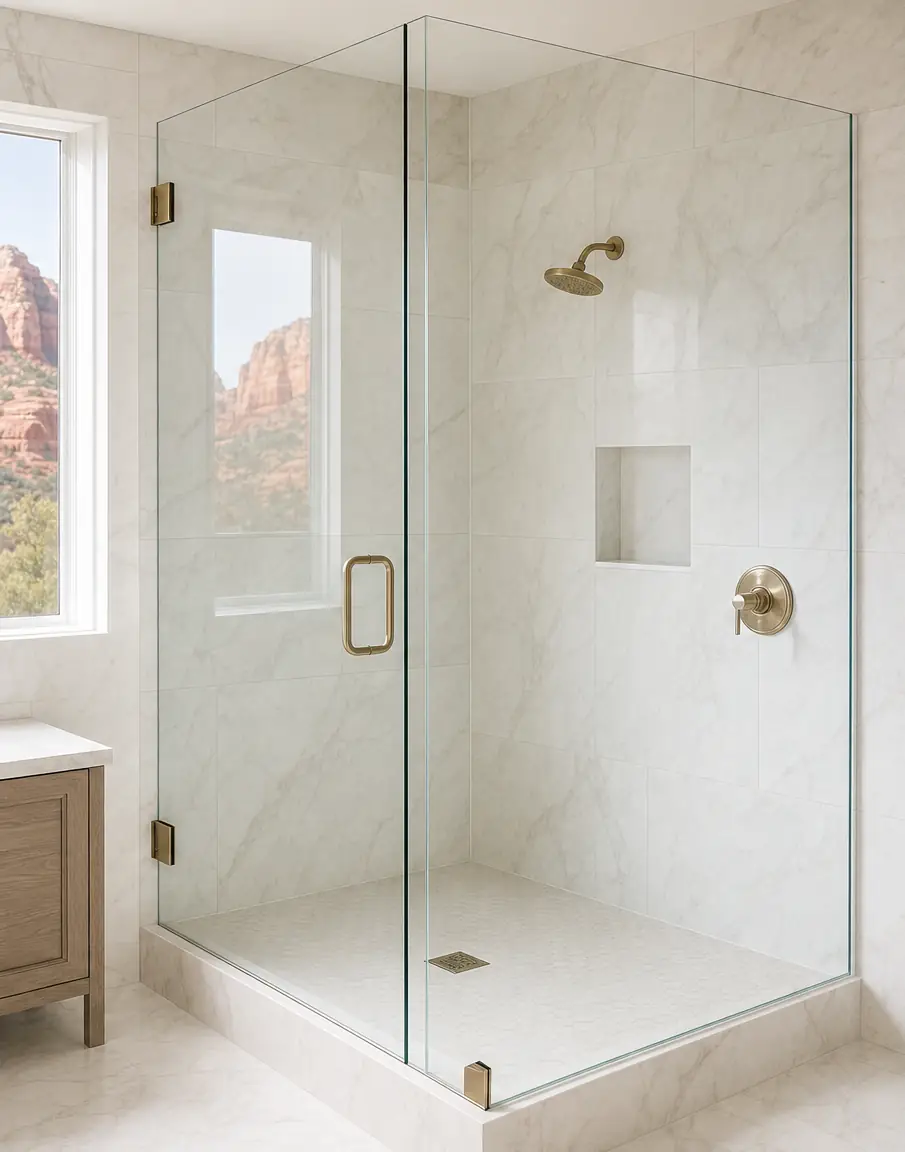
Shower glass is where most people notice it first. Drops dry on the door, the minerals stay behind, and soap mixes in to make a cloudy film. Fresh spots lift off with vinegar and a soft sponge. Spots left for a long time can slowly wear into the glass, and that damage, called etching, does not clean off.
Our guide on how to remove hard water stains from shower glass walks through the whole job step by step, including how to tell spots from etching.
Faucets and fixtures
Faucets, shower heads and drains get wet many times a day, so they collect minerals fast.
You will see a white or chalky crust around the base of a faucet, on the handles and along the edge of the sink drain. Shower heads can clog as minerals build up in the small holes, so the spray gets weaker or shoots off to one side. Polished metal loses its shine under a dull film, and the crust traps grime that a quick wipe will not reach.
Gentle cleaning works best here. Many fixtures have a finish that harsh scrubbing or strong acid cleaners can damage, so start mild and rinse well.
Tile and grout
Tile walls and shower floors stay wet longer than anything else in the bathroom, and the minerals settle in.
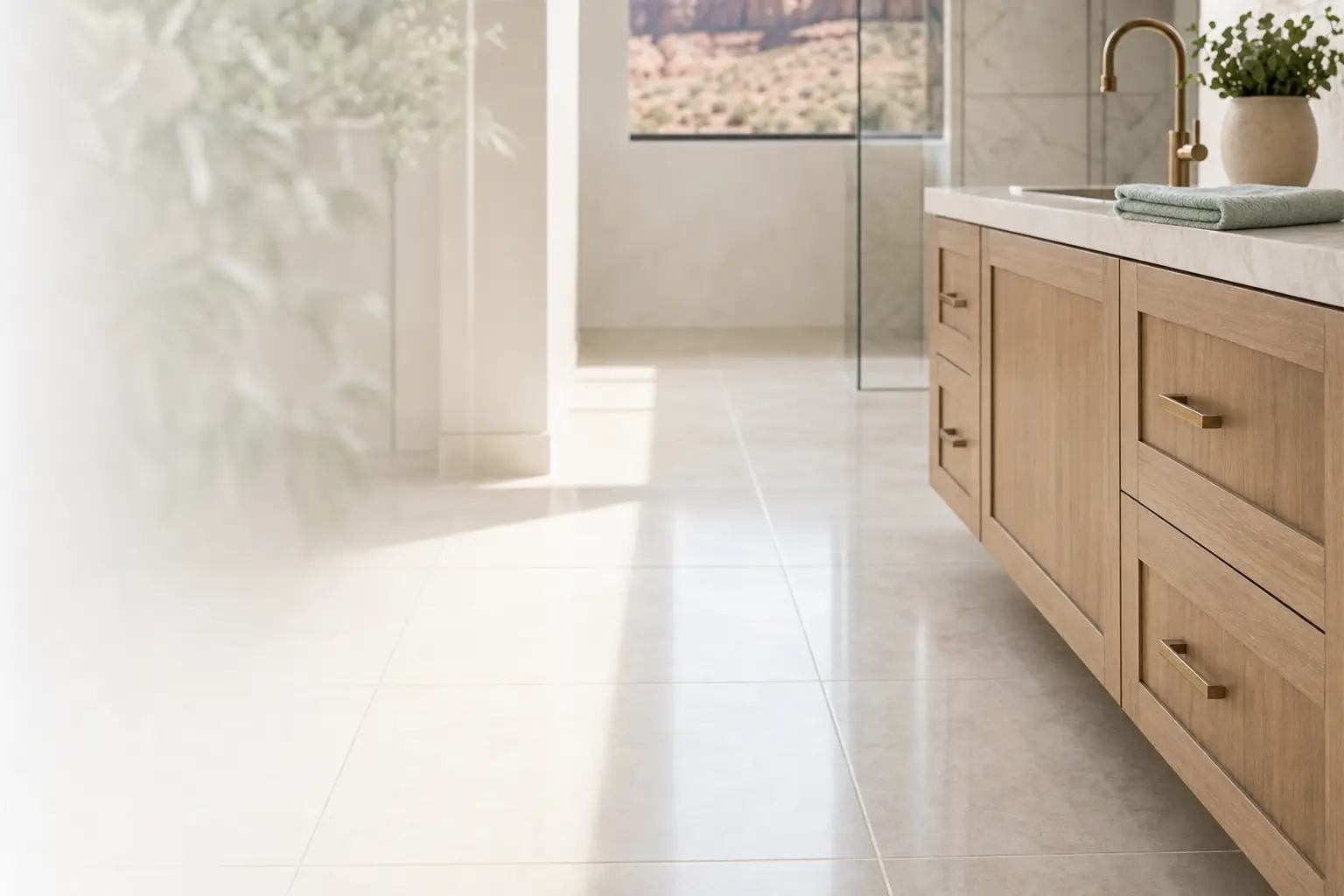
Glossy tile turns dull and a little rough to the touch. Grout, which is porous, holds on to mineral film and soap and can look gray or stained even after you scrub the tile around it. Natural stone like marble and travertine needs extra care, because the acids that lift hard water from glass can etch stone. On stone, use a cleaner made for stone.
Appliances and valves
Some of the buildup happens where you cannot see it.
- Dishwashers. A white film can form on glasses and inside the machine.
- Kettles and coffee makers. Scale forms inside, where water heats again and again.
- Water heaters, washers and ice makers. Minerals collect in places that rely on water flowing freely.
- Valves. Mineral buildup can make shower and faucet valves stiff over time, and a valve left long enough can seize.
If a handle has started to feel stiff, or a faucet keeps dripping after you turn it off, those are signs worth paying attention to before they turn into a bigger repair.
Softeners and filters
A water softener takes out much of the calcium and magnesium before the water reaches your fixtures. Most homes with one see less new buildup on glass, faucets and tile.
What a softener does not do is remove the buildup you already have. The film on the shower door and the crust on the faucet stay until someone cleans them off. Filters vary a lot in what they remove, so if you are thinking about one, ask the installer what it is designed to take out of the water.
Either way, a clean start helps. Clear the old buildup once, and the new habits below keep it from coming back as fast.
Simple habits that help
Hard water spots start when water dries on its own. The easiest fix is to dry things first.
- Squeegee the shower glass after every shower.
- Wipe faucets and the sink dry with a towel after use.
- Leave the shower door or curtain open so the space dries.
- Rinse soap off the tile before you step out.
- Descale the kettle and coffee maker every so often.
When to call a cleaner
If the film on your glass or fixtures has built up for months, it takes patience and the right tools to lift it without scratching. That is the kind of work our team does every week, on shower doors, mirrors, faucets, tile and windows. It also makes sense before guests arrive, before a sale or a move-out, or when you would rather spend your weekend somewhere else.
If we find a dripping valve or a fixture that needs repair while we clean, you’ll hear about it. Lacy’s husband is a licensed general contractor and can give you a quick free estimate.
We are licensed and insured, and our cleaners are background-checked employees. Call (435) 310-5040 or request a free quote below.
Small habits, less buildup
None of these take long, and together they stretch the time between deep scrubs.
Squeegee after every shower
Wipe faucets dry after use
Book a deep clean each season
Hard water getting ahead of you?
Our team clears mineral film from glass, fixtures and tile across Santa Clara and St. George.
Hard water questions
Why is the water hard in Washington County?
Water picks up minerals, mostly calcium and magnesium, as it moves through rock and soil on its way to your tap. Southern Utah water carries a lot of them, so you see the white film wherever drops dry.
Is hard water bad for my home?
It is not a danger, but it is hard on surfaces. Over time the minerals cloud glass, crust on faucets, dull tile and grout, and build up inside appliances and valves. Regular cleaning keeps it from settling in.
Will a water softener remove the buildup I already have?
No. A softener reduces new buildup by taking out much of the minerals before the water reaches your fixtures. What is already on the glass, tile and faucets still needs a good clean.
Can hard water make a faucet or shower valve stiff?
Yes. Minerals can build up inside a valve over time, so it gets harder to turn and can eventually seize. If a handle feels stiff or a valve drips, it is worth having it looked at before it gets worse.
What is the easiest way to fight hard water spots?
Dry things before the water dries on its own. A squeegee on the shower glass and a quick towel over faucets and the sink take a minute and stop most spots before they start.