
Hard water glass
How to Remove Hard Water Stains From Shower Glass

In this article
Why shower glass spots so fast in Southern Utah
Our water carries a lot of calcium and magnesium. When drops dry on the glass, the minerals stay behind as a white, cloudy film.
Here in Santa Clara, St. George and the rest of Washington County, the dry desert air speeds that up. Water on a shower door can dry before you have finished with your towel, and every drop that dries leaves a little more behind. One shower does not do much. A few weeks of showers, layered one on top of another, turn clear glass hazy.
Soap and shampoo make it worse. They mix with the minerals and form a sticky layer that holds on to the next round of spots. That is why a door that looked fine last month can suddenly look foggy, even if you wipe it now and then.
The good news is that fresh spots come off easily. The longer they sit, the harder they get, so a little care every week saves a lot of scrubbing later.
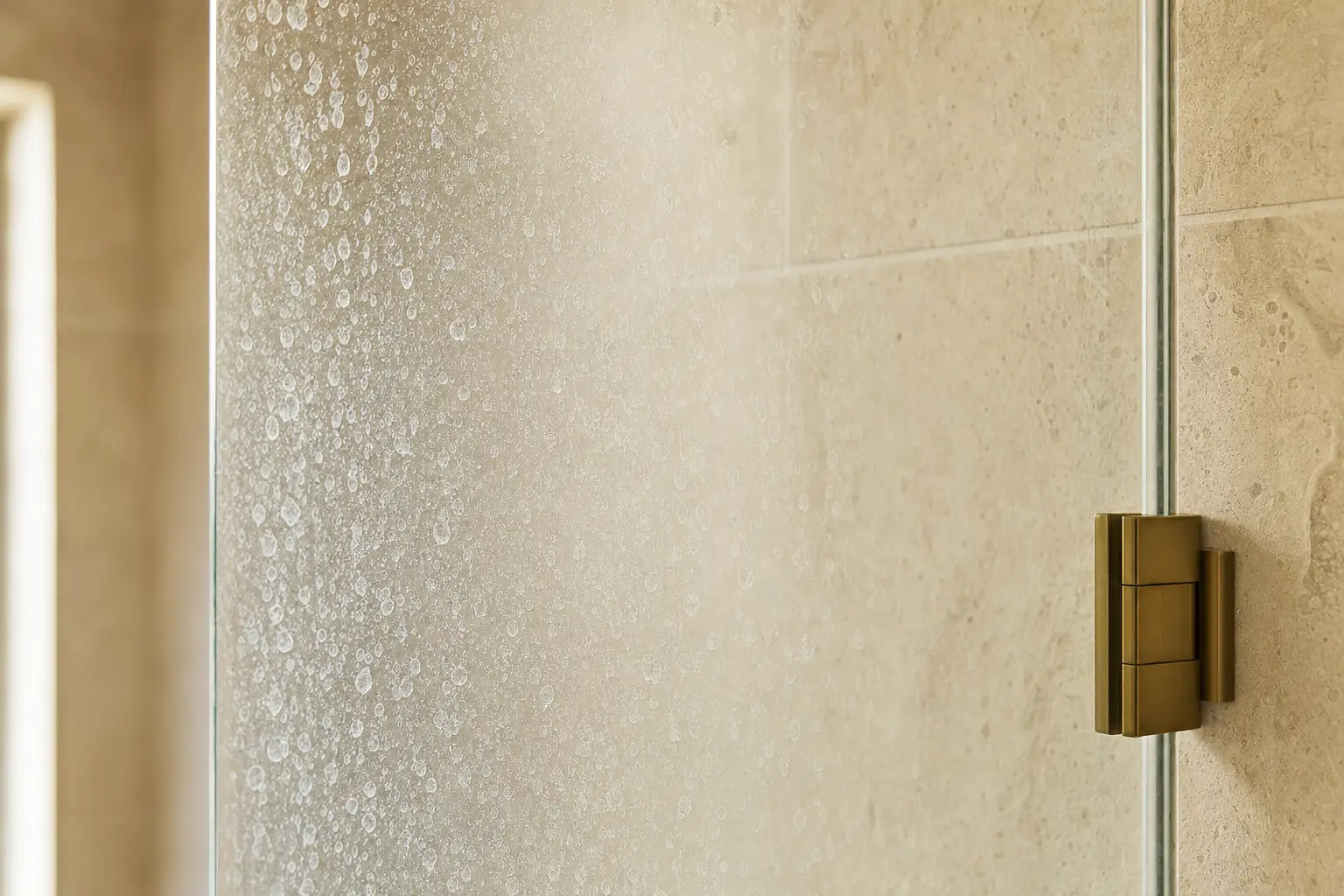
Spots or etching?
Mineral spots sit on top of the glass and wipe away with the right cleaner. Etching is damage in the glass itself and does not come off.
It helps to know which one you have before you start scrubbing. Spots and film respond well to a mild acid like vinegar. Etching happens when minerals stay on the glass for a long time and slowly wear into the surface. No cleaner can wash that away, because there is nothing left on top to remove.
The fingernail test
Run a fingernail across a dry spot. If you feel a bump, it is mineral buildup. If the glass feels smooth but still looks cloudy, it may be etched.
What you need
Nothing fancy. Most of this is probably in your kitchen already.
- White vinegar
- Baking soda
- A spray bottle
- A non-scratch sponge
- A squeegee
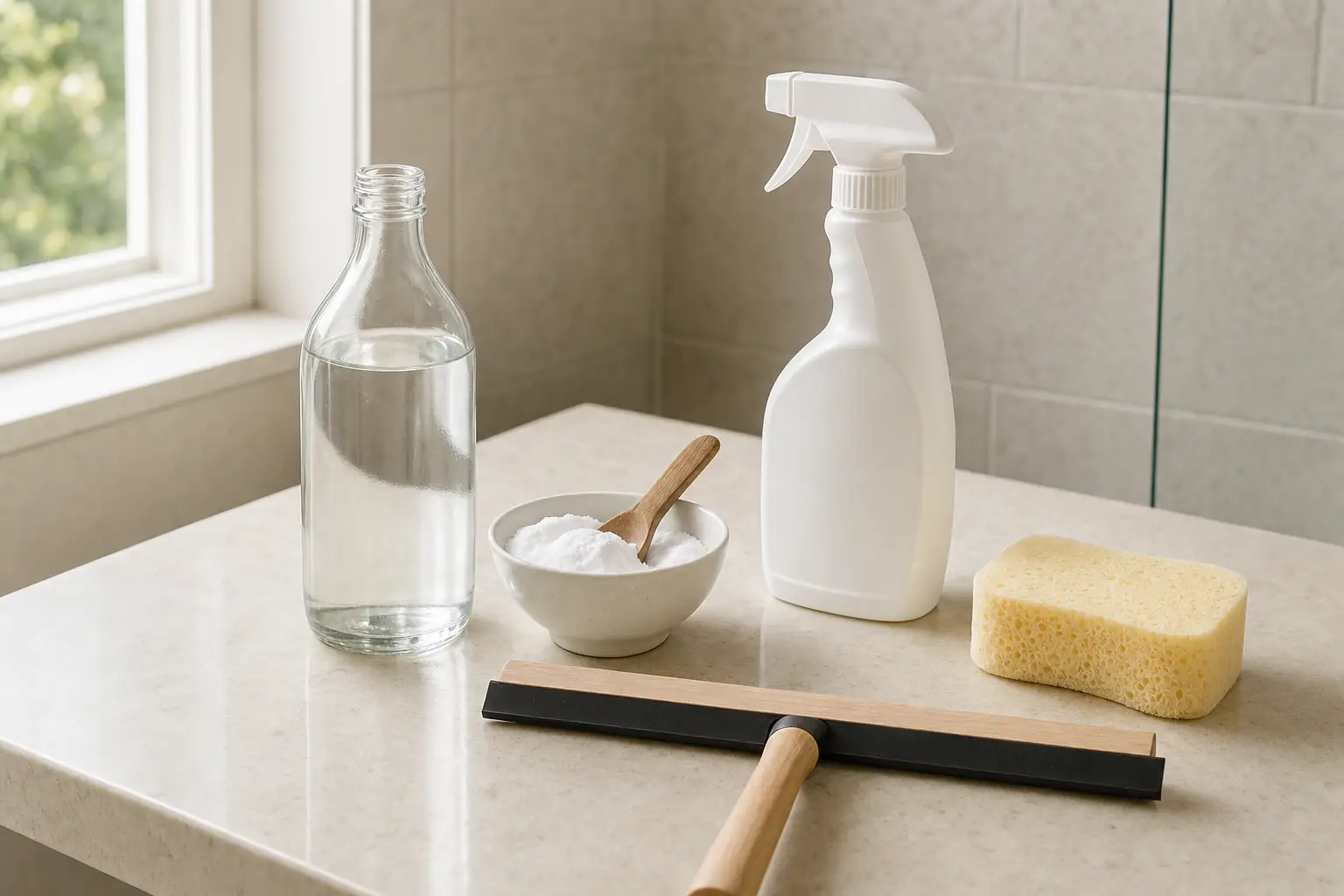
Plain white vinegar works best. Skip anything with a scent or color. A microfiber cloth is handy too, for drying and a final polish, and rubber gloves are a good idea if your skin is sensitive.
Step by step
1
Warm the glass
Run a hot shower for a minute to loosen the film. The steam softens soap scum and gives the vinegar a head start. Turn off the water and leave the glass damp.
2
Spray and wait
Spray warm vinegar and let it sit for fifteen minutes. Warm it briefly first, then pour it into the spray bottle. Cover every spotted area, and spray again if it starts to dry, since vinegar works best while it stays wet.
3
Scrub gently
Use a baking soda paste on a soft sponge. Never steel wool. Mix baking soda with a little water until it feels like toothpaste, then work in small circles with light pressure. Give extra time to the bottom of the door, where water sits the longest.
4
Rinse and squeegee
Rinse with clean water and dry the glass right away. Pull the squeegee from top to bottom in overlapping strokes, then wipe the edges with a dry cloth. If a faint haze is left, repeat steps two and three once more.
A word about stone: vinegar is an acid, so keep it off natural stone like marble and travertine. If your shower walls are stone, spray the vinegar onto the sponge instead of the glass, and rinse any drips off the tile right away. Open a window or run the fan while you work.
What never to use on glass
Hard water can be stubborn, and it is tempting to reach for something stronger. These can do more harm than the spots ever did.
- Steel wool or scouring pads. They leave fine scratches, and scratches catch even more minerals.
- Razor blades on coated glass. Many shower doors have a protective coating, and a blade can scrape it right off.
- Harsh acids. Strong acid cleaners can harm fixtures, grout and stone, and the fumes are rough in a small bathroom.
- Abrasive powders. Gritty cleansers dull the glass over time and make it harder to keep clean.
And never mix vinegar with bleach or with any cleaner that contains it. The two together give off fumes you do not want in a closed room.
When to call a pro
If you have tried vinegar and baking soda twice and the glass still looks cloudy, it may be time for a second set of hands. Heavy buildup takes patience and the right tools to lift without scratching, and that is the kind of work our team does. It also makes sense before a move-out, a home sale or guests arriving, when you want every pane clear at once.
If the fingernail test tells you the glass is etched, cleaning will not fix it. Etching cannot be cleaned off. It may mean the glass needs professional polishing or replacing, and a glass specialist is the right person to ask. We will always tell you honestly what we see.
For everything else, our window and hard water glass cleaning covers shower doors, windows and mirrors across Santa Clara and St. George. Call (435) 310-5040 or request a free quote below. We are licensed and insured.
Keep it clear
A few small habits keep the film from coming back. None of them take long, and together they stretch the time between deep scrubs.
Squeegee after every shower
Wipe the track and handle weekly
Book a deep clean each season
Still cloudy after all that?
Our team clears hard water from shower glass and windows across Santa Clara and St. George.
Hard water glass questions
Does vinegar damage shower glass?
No. Plain white vinegar is safe on glass and is one of the gentlest ways to lift mineral spots. Keep it off natural stone like marble and travertine, and rinse any drips from metal fixtures when you finish.
How often should I clean shower glass?
A quick squeegee after every shower does most of the work. Plan on a vinegar clean every week or two, and a deeper scrub whenever you notice a haze starting to build.
Can etched glass be fixed?
Etching cannot be cleaned off, because the damage is in the glass itself. Depending on how deep it goes, the glass may need professional polishing or replacing. A glass specialist can tell you which.
Will a water softener stop the spots?
A softener takes out much of the minerals that cause spots, so most homes see less buildup. It will not remove spots that are already there, so the glass still needs a good clean first.