
Product guide
Does CLR Work on Hard Water Stains?
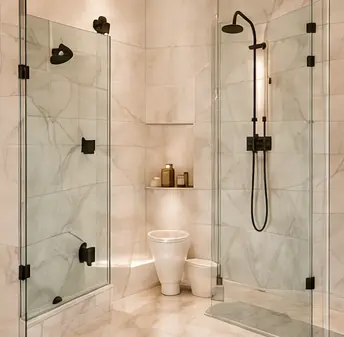
The short answer
Yes, CLR can dissolve hard water deposits on the right surfaces. It can also harm the wrong ones. For shower glass in your home, our hard water shower glass care lifts mineral film by hand.
The maker lists chrome, fiberglass, porcelain and stainless steel among the surfaces it suits, and gives directions for glass. Its list of surfaces to avoid is longer.
This guide follows the maker’s own directions for the original Calcium, Lime and Rust Remover. Always read the label on your bottle, since products change.
How it works
Hard water stains are minerals, mostly calcium and magnesium, left behind when water dries.
CLR stands for calcium, lime and rust. It is an acid cleaner made to dissolve those deposits. That same acid is why it needs care, because stone and some metal finishes react to it.
Using it by the label
These steps come from the maker’s directions.
1
Test a hidden spot
Try a small area you cannot see first. The maker says older sinks, tubs and tiles can be more sensitive.
2
Mix it with warm water
Mix equal parts CLR and warm water, in a well-ventilated room. Open a window or run the fan.
3
Two minutes, no more
Apply it with a damp cloth or sponge. Do not leave it on any surface for longer than two minutes.
4
Rinse right away
Rinse promptly and thoroughly with cold water, then dry the surface. Wipe up any spills at once.
Never mix CLR with bleach or other household cleaners. Wear gloves, keep it away from your eyes, and keep kids and pets out of the room.
Where not to use it
These are the surfaces on the maker’s list that matter most in Southern Utah homes.
- Natural stone. The maker says not to use it on any natural stone, especially marble. That includes travertine and granite.
- Brass, copper and aluminum. It can strip the finish and pit some grades. Shower door frames and tracks are often aluminum, so keep it on the glass.
- Painted, coated or sealed surfaces. On brushed nickel, bronze or matte black faucets, check the faucet maker’s care guide before any acid.
- Colored grout. The maker says it is only safe on white grout.
- Wood, carpet and fabric. Keep it off all of them.
What it cannot fix
CLR removes deposits that sit on top of the glass. It cannot remove etching, which is damage in the glass itself. The maker notes that glass which stays cloudy may be etched.
Try the fingernail test in our guide on how to remove hard water stains from shower glass. If the glass feels smooth but still looks cloudy, it may be etched. A glass specialist can tell you whether polishing or replacing makes sense.
Try gentler first
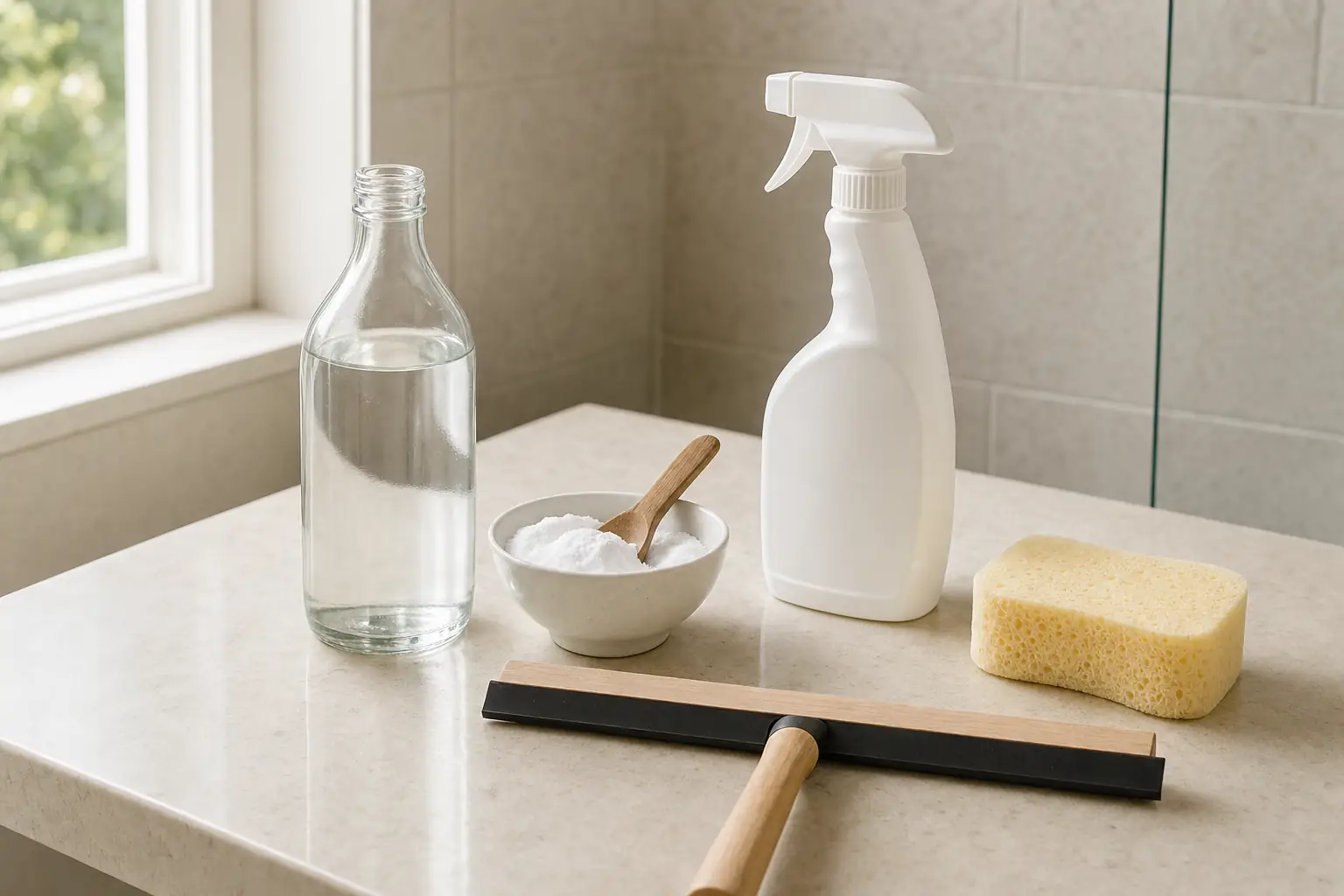
For light film, plain white vinegar and a soft sponge often do the job. Save stronger products for buildup that will not move, and use them only where the label allows.
If you have stone walls, brass fixtures or coated glass, careful hand work may be the safer choice. That is the kind of job our team does every week.
We are licensed and insured. Call (435) 310-5040 or request a free quote below.
Use any acid cleaner safely
Three rules worth keeping, whatever is in the bottle.
Test a hidden spot first
Two minutes, then rinse
Keep it off natural stone
Rather leave it to us?
We lift hard water film from glass and fixtures by hand across Santa Clara and St. George.
CLR questions
Is CLR safe on natural stone?
No. The maker says not to use it on any natural stone, especially marble. That includes travertine and granite. Use a cleaner made for stone instead.
Can CLR remove etching from glass?
No. Etching is damage in the glass, not a deposit on top, so no cleaner can wash it away. A glass specialist can tell you if polishing or replacing is the answer.
How long can I leave CLR on hard water stains?
No longer than two minutes, according to the maker. Then rinse promptly and thoroughly with cold water. Leaving it on longer risks the surface.
Can I use CLR on a shower door?
On the glass, with care and by the label. Keep it off the frame and track, which are often aluminum, and off any stone tile nearby. Test a hidden spot first.